
You’ve spent a lot of time invested in your Atlanta or North Georgia home. From the beautifully maintained landscaping to the reassuring integrity of your roof overhead, you understand the value of preparation and quality. You’ve likely dealt with unexpected hail storms that can ping and dent shingles, or the relentless summer humidity that tests the durability of every outdoor surface. This understanding of weathering the elements, of proactive maintenance, extends beyond your property lines. It’s a mindset that serves you well, especially when you venture outdoors for recreation or, in less ideal circumstances, when nature throws a curveball.
This isn’t about fear-mongering; it’s about smart, empowered preparedness. Think of it like getting your roof inspected before a major storm – you wouldn’t wait until the rain is pouring through your ceiling to address the issue, would you? Similarly, venturing into the Georgia wilderness, whether for a day hike in the Chattahoochee National Forest or a multi-day camping trip near the Cohutta Wilderness, without basic survival gear is akin to leaving your home vulnerable. The beauty of our region is undeniable, but it demands respect. Understanding the essentials of outdoor survival gear isn’t just for extreme situations; it’s about enhancing your enjoyment, confidence, and safety on any outdoor excursion.
When you think about surviving outdoors, the immediate need is often shelter. It’s your first line of defense against the unpredictable Georgia weather, from a sudden downpour to a surprisingly chilly mountain evening. You know how crucial a well-constructed roof is for protecting your home from the elements; the same principle applies to your personal shelter in the wild.
Emergency Shelter: More Than Just a Tent
You might picture a full-blown tent, and that’s certainly an option for longer trips. But for immediate survival, especially in a situation where you might have to make camp unexpectedly, lightweight and versatile options are key. A high-quality tarp, at least 8×10 feet, can be configured in numerous ways to provide protection from rain and wind. Look for one made from ripstop nylon or polyester, ideally with reinforced grommets. This is surprisingly effective, much like a well-pitched awning over your patio can keep the sun off.
Consider a bivy sack as well. This is essentially a waterproof, breathable sack that your sleeping bag goes inside. It offers more protection than just a sleeping bag alone and is incredibly compact. For ultimate space-saving, a Mylar emergency blanket, often called a “space blanket,” is a must-have. While not providing substantial warmth on its own, it reflects a significant amount of your body heat back towards you. Think of it as a personal thermal barrier, similar to how attic insulation helps regulate your home’s temperature.
If you’re planning a more extended trip, a lightweight, three-season tent is a worthwhile investment. For the Atlanta metro and North Georgia area, where humidity can be a factor, good ventilation is important to prevent condensation buildup inside your tent. Look for tents with mesh panels and rainfly designs that allow for airflow.
Staying Warm: Beyond Just a Sleeping Bag
While a sleeping bag is essential for overnight comfort, having layers of extra clothing is equally critical. You understand how a good, insulated attic or properly sealed windows can keep your home warm in winter; the same applies to your body. A common mistake is relying on just one heavy jacket. Instead, the layering system is your best friend.
Start with a base layer that wicks moisture away from your skin. Synthetic materials or merino wool are excellent choices here. On top of that, you’ll want an insulating layer. Fleece jackets or down vests are perfect for trapping body heat. Your outer layer should be a waterproof and windproof shell. This is your primary defense against rain and blustering winds, just as a robust roofing material shields your home.
Don’t forget your extremities! A warm hat, even in milder weather, is vital as you lose a significant amount of heat through your head. Insulated gloves are a must for colder days, and bringing an extra pair of wool or synthetic socks can make a world of difference if your feet get wet. You know how uncomfortable damp socks can make a simple walk around your property; imagine that feeling for hours or days in the backcountry.
For those looking to enhance their outdoor adventures, it’s crucial to equip yourself with the right tools and supplies. An essential outdoor survival gear checklist can help ensure you’re prepared for any situation. To further explore the best products available, check out this related article on outdoor gear essentials at Outdoor Survivors Shop, where you’ll find a variety of items tailored for survival and exploration.
Essential Navigation and Illumination: Finding Your Way and Seeing the Light
Getting lost is a primary concern for any outdoor enthusiast. In the dense forests of North Georgia or even on less-traveled trails closer to Atlanta, relying solely on your memory or phone GPS can be a risky proposition. Proper navigation tools and reliable light sources are your lifeline.
Mastering Navigation: Map, Compass, and GPS
You wouldn’t try to navigate a complex roofing repair without a plan or the right tools, and the same applies to the outdoors. A topographic map of the area you’re exploring is your foundational navigation tool. Learn how to read it – understand contour lines, symbols, and scale. It’s your blueprint for the terrain.
Complement your map with a reliable compass. Practice using it before you go out. Knowing how to take a bearing and orient your map to true north is a fundamental skill that can save you from serious trouble. You wouldn’t rely on a single nail to hold a critical roof section; you need multiple, reliable methods. A GPS device or a smartphone with downloaded offline maps can be incredibly useful backups, but they rely on battery power and satellite signals. Treat them as supplementary tools, not replacements for your map and compass skills.
For North Georgia, where trails can be steep and sometimes less clearly marked than some of the more manicured paths closer to the city, these skills are paramount. Even on a familiar day hike, an unexpected detour or a moment of disorientation can quickly turn into a challenge if you’re not prepared.
Light Sources: Don’t Get Caught in the Dark
You know the importance of good exterior lighting for your home’s security and usability. The same applies to your personal safety in the wilderness. A headlamp is an absolute must-have. It keeps your hands free for tasks like setting up camp, cooking, or tending to an injury. Look for one with multiple brightness settings and a red-light option, which preserves your night vision.
Crucially, always bring extra batteries. You wouldn’t leave your home without spare batteries for your smoke detectors or flashlight; the same principle applies here. A small, waterproof flashlight can serve as a backup. In a truly dire situation, you might even consider a small hand-crank or solar-powered flashlight, though battery-powered options generally offer more reliable brightness. You want to be able to see your surroundings, find your way back to a trail, or signal for help, not fumble in the dark.
Hydration and Sustenance: The Lifeblood of Survival

Your body, like your home’s foundation, needs consistent support to function. Water and food are non-negotiable elements of any outdoor excursion, and having a plan for both is crucial. You understand the importance of proper plumbing and water management in your home; the same applies to your personal hydration.
Water: Purification is Key
While you can carry a reasonable amount of water, it’s unlikely you’ll be able to carry enough for an extended trip. This means you need the ability to treat water from natural sources. A durable water bottle or hydration reservoir is your starting point. Consider a wider-mouthed bottle that’s easier to fill from streams or lakes.
For purification, you have several options. Water filters are very effective at removing bacteria and protozoa. They come in various forms, from pump filters to straw-like devices. Chemical treatments, such as iodine tablets or chlorine dioxide drops, are another excellent backup. They are lightweight and effective but can sometimes impart a taste to the water. Boiling water is the most reliable method, but it requires a fire and time. Having at least two purification methods is a wise practice, similar to having both a primary and secondary drainage system in your home’s plumbing.
Remember, dehydration can set in surprisingly quickly, especially in Georgia’s warm and humid climate. Staying on top of your water intake is paramount, just as ensuring your home’s gutters are clear is vital for preventing water damage.
Food: Fueling Your Adventure
While you might not be planning a week-long expedition, carrying extra food or high-energy snacks is always a good idea. A missed meal or an unexpected delay can lead to fatigue and poor decision-making. Trail mix, energy bars, jerky, and dried fruit are all excellent choices. They are lightweight, non-perishable, and provide sustained energy.
If you are planning a longer trip, you’ll want to pack lightweight, calorie-dense meals that can be easily prepared. Freeze-dried meals are a popular choice for backpackers. Think about the energy you expend hiking, climbing, or even just navigating challenging terrain. You need fuel to keep your body functioning effectively. Just as a well-insulated home requires less energy to heat and cool, a well-nourished body performs better in demanding situations.
Fire and First Aid: Essential for Comfort and Crisis

The ability to make fire and the preparedness to handle injuries are two cornerstones of outdoor survival. These aren’t just about comfort; they can be critical for your well-being and in emergency situations.
Making Fire: Your Heat and Light Source
Fire is more than just a way to cook food. It’s a source of warmth, a way to purify water, and a signal for help. You’ll need reliable ways to start one. Waterproof matches stored in a sealed container are a must. A reliable lighter is also essential, and keeping it in a waterproof bag is a good idea.
Beyond matches and lighters, consider bringing a dedicated fire starter. These can be cotton balls soaked in petroleum jelly, commercially made fire starter sticks, or even a Ferrocerium rod and striker. These are designed to ignite easily, even in damp conditions. You know how important a properly functioning fireplace or wood stove is for your home’s comfort; having a reliable way to make fire in the wild offers a similar fundamental benefit. Practice building a fire in different conditions before you head out.
First Aid: Be Ready for the Unexpected
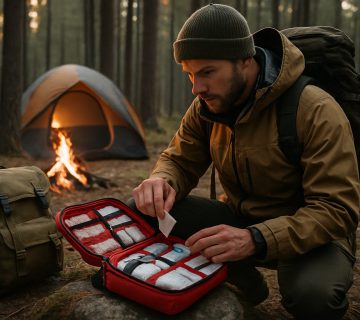
A compact first-aid kit is arguably one of the most important items you can carry. You understand the importance of having a readily accessible medicine cabinet at home; in the backcountry, your first-aid kit is your mobile version. It should contain essentials like bandages of various sizes, sterile gauze pads, adhesive tape, antiseptic wipes, pain relievers, and any personal medications you require.
Consider adding items like blister treatment, insect repellent, and sunscreen. For North Georgia, where ticks can be a concern, tweezers for tick removal are a good idea. Knowing basic first-aid skills is as important as having the kit itself. Understanding how to clean and dress a wound, treat minor burns, or manage sprains can prevent small issues from becoming major problems. If you’re venturing into more remote areas, consider taking a wilderness first-aid course.
When preparing for outdoor adventures, having the right gear is crucial for survival, and one essential item to consider is a tactical backpack. For those looking to enhance their outdoor survival skills, you might find it helpful to read about how to select the perfect tactical backpack in this informative article. Understanding the features and benefits of a tactical backpack can significantly improve your overall preparedness and comfort during your excursions. You can check out the article here: how to choose a tactical backpack.
Tools and Signaling: The Improviser’s Arsenal and the Call for Help
| Item | Description |
|---|---|
| Water bottle | A reusable water bottle to stay hydrated |
| First aid kit | Basic medical supplies for treating minor injuries |
| Knife | A multi-purpose tool for cutting and survival tasks |
| Fire starter | Matches, lighter or flint for starting a fire |
| Emergency shelter | Tent, tarp or emergency blanket for protection |
| Flashlight | Portable light source for visibility in the dark |
| Food supplies | Non-perishable food items for sustenance |
| Navigation tools | Map, compass or GPS device for finding your way |
The right tools can help you solve problems, make repairs, and adapt to unexpected situations. And when all else fails, being able to signal for help can be a literal lifesaver.
The Multi-Tool: Your Mobile Workbench
A quality multi-tool is like a miniature toolbox that fits in your pocket. It typically includes pliers, wire cutters, screwdrivers, a can opener, and, of course, a knife blade. A sturdy, fixed-blade knife is also an excellent option, often more robust for tasks like batoning wood or preparing food.
Beyond the multi-tool, consider carrying a small roll of duct tape. This ubiquitous item has an astounding number of uses, from repairing gear to improvising bandages. You’ve probably used it around your house for a quick fix; in the wilderness, its utility is amplified. Think about how you’d handle a tear in your tent fabric or a loose strap on your backpack. These tools empower you to be resourceful, much like having a well-stocked toolbox allows you to tackle various home maintenance tasks.
Signaling for Help: Making Your Presence Known
If you find yourself in a situation where you need assistance, being able to signal effectively is crucial. A loud whistle is an essential item. Three short blasts are universally recognized as a distress signal. It requires minimal effort and can be heard over long distances.
A signal mirror is another invaluable tool, especially in open terrain. By reflecting sunlight, you can create a bright flash that can be seen for miles. Practice using it to aim the reflection at potential rescuers or aircraft. These simple devices are incredibly effective at drawing attention, much like a brightly colored roof might be visible from an aerial perspective. You understand the importance of a clear, visible address for emergency services to find your home; these signaling devices aim to achieve the same for you in the wild.
When you’re exploring the beautiful landscapes around Atlanta and North Georgia, whether it’s a challenging hike in the mountains or a leisurely day by a lake, the principles of preparedness remain the same. Just as you ensure your home is protected from the elements and ready for anything, equipping yourself with essential outdoor survival gear provides you with the confidence and capability to enjoy your adventures to the fullest and to respond effectively should the unexpected arise. And for peace of mind when you need professional help for your home’s most critical protection – your roof – remember that Verified Roofers can connect you with licensed, insured, and vetted local roofing contractors.
FAQs
What is an essential outdoor survival gear checklist?
An essential outdoor survival gear checklist is a list of items that are necessary for ensuring safety and survival in outdoor environments. These items are crucial for providing protection, sustenance, and navigation in the wilderness.
What are some items that are typically included in an essential outdoor survival gear checklist?
Some items that are typically included in an essential outdoor survival gear checklist are a first aid kit, water purification tools, a multi-tool, fire-starting materials, a map and compass, emergency shelter, extra clothing, and high-energy snacks.
Why is it important to have an essential outdoor survival gear checklist when venturing into the wilderness?
It is important to have an essential outdoor survival gear checklist when venturing into the wilderness because it helps to ensure that you are prepared for unexpected situations and emergencies. Having the necessary gear can make a significant difference in your ability to survive and stay safe in outdoor environments.
How can I use an essential outdoor survival gear checklist effectively?
You can use an essential outdoor survival gear checklist effectively by carefully reviewing and packing all the items on the list before heading out into the wilderness. It is also important to regularly update and maintain your gear to ensure that it remains in good working condition.
Where can I find a reliable essential outdoor survival gear checklist?
You can find a reliable essential outdoor survival gear checklist from reputable outdoor survival experts, survival guides, and outdoor adventure websites. It is important to choose a checklist that is tailored to the specific environment and conditions you will be facing.
Gear Up for Your Next Adventure
Shop related gear from Outdoor Survivors:



No comment