
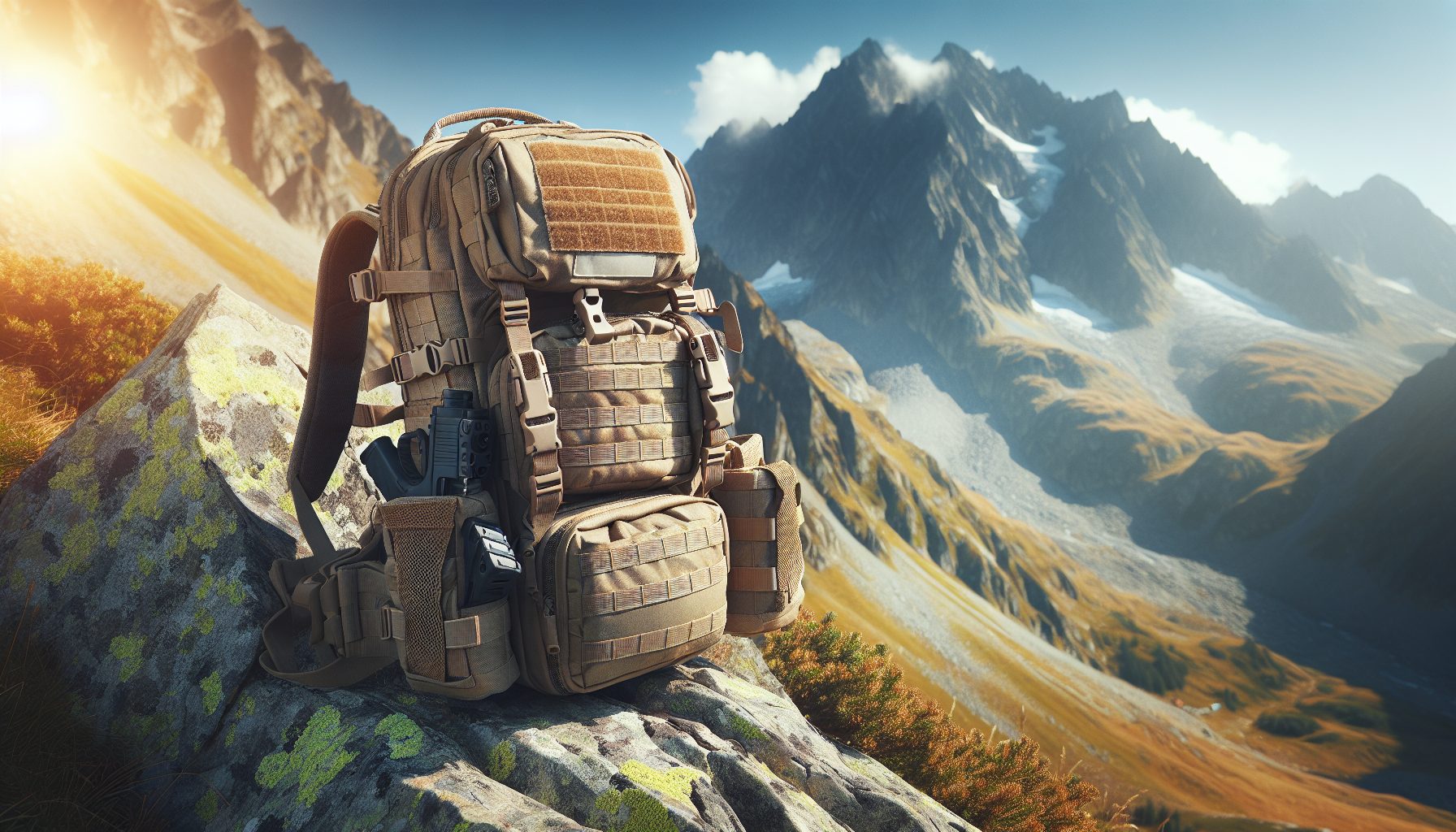
Whether you’re heading into the backcountry for a week-long hunting trip or navigating an urban emergency, one thing is certain: your backpack is your lifeline. But not all packs are built the same — and choosing the wrong one can mean the difference between a successful mission and a painful, exhausting slog.
The global tactical backpack market was valued at $1.4 billion in 2023 and is projected to grow at 6.8% CAGR through 2030, driven by demand from military, law enforcement, and civilian outdoor enthusiasts alike (Grand View Research). That explosive growth means more options — which is great for consumers, but only if you know how to navigate them.
This guide breaks down every factor that matters when choosing a tactical backpack: capacity sizing, MOLLE compatibility, frame types, material durability, load distribution, and more. By the end, you’ll know exactly what to look for — and which packs to avoid.
What Is a Tactical Backpack?
A tactical backpack is a purpose-built pack designed for military, law enforcement, hunting, hiking, or emergency preparedness use. Unlike everyday backpacks, tactical packs prioritize durability, modular organization, and rapid access over aesthetics and weight savings.
Key characteristics include:
- MOLLE webbing — rows of nylon loops for attaching modular pouches and accessories
- Heavy-duty materials — typically 500D–1000D nylon or Cordura fabric
- Multiple compartments — dedicated pockets for weapons, hydration, first aid, and comms
- Reinforced stitching — often double or triple-stitched at stress points
- Subdued colorways — coyote tan, OD green, black, multicam, and ACU digital patterns
Step 1: Choosing the Right Capacity (Liters)
Capacity is the single most important spec to get right. Carry too little and you’ll leave critical gear behind. Carry too much and you’ll destroy your back. A study published in Applied Ergonomics found that loads exceeding 30% of body weight significantly increase lumbar strain and injury risk during extended carry.
Tactical Backpack Size Guide
| Capacity | Best For | Typical Use Case |
|---|---|---|
| 10–20L | Day packs, EDC | Range bag, urban carry, 4–8 hour missions |
| 20–35L | Day-to-2-day packs | Day hikes, bug-out readiness, weekend trips |
| 35–65L | Multi-day / 72-hour packs | 3-day bug-out bag, hunting weekend, patrol operations |
| 65L+ | Extended expedition | Wilderness survival, 7-day+ missions, frame-critical loads |
Our full tactical backpack catalog covers every size range. If you’re building a 72-hour emergency kit, the 35–50L range is the sweet spot — enough for food, water, shelter, and first aid without exceeding the safe carry threshold for most adults.
For a compact day pack, the 15L MOLLE Tactical Hydration Backpack is built for exactly that — it includes a dedicated hydration sleeve and full MOLLE webbing to expand carry capacity with add-on pouches.
Step 2: Understanding MOLLE Systems
MOLLE stands for Modular Lightweight Load-carrying Equipment. It’s a grid of woven nylon webbing rows sewn onto the exterior of tactical packs, allowing you to attach compatible pouches, holsters, med kits, and tools.
The system was developed for the U.S. military in 1997 and has become the universal standard across military, law enforcement, and civilian tactical gear. The “PALS” (Pouch Attachment Ladder System) pattern uses 1-inch wide rows spaced 1.5 inches apart — the specific measurements that make MOLLE gear universally compatible across manufacturers.
What to Look for in MOLLE Quality
- Row spacing — exactly 1.5 inches between rows for true PALS compatibility
- Stitching pattern — bar-tacked ends on each row, not just machine stitching
- Webbing width — genuine 1-inch webbing, not 3/4-inch budget substitutes
- Density — full-panel MOLLE on back, sides, and top lid gives maximum flexibility
Our Tactical MOLLE System Hiking Rucksack is a strong example of full-panel MOLLE done right — 600D Cordura, triple-stitched webbing rows, and a clean clamshell opening for rapid gear access.
Step 3: Frame Types and Load Distribution
For packs under 25L, internal structure is minimal — foam back panels and padded straps are sufficient. But once you’re carrying 35L or more, the frame system becomes critical for both comfort and injury prevention.
Internal vs. External Frame
Internal frame packs (most modern tactical packs) use aluminum stays or rigid polymer sheets embedded in the pack body. They sit closer to your back, improve balance during movement, and are compatible with body armor and carrier systems. These are preferred for tactical and military applications.
External frame packs transfer weight to the hips via an aluminum or steel frame that sits off the back. Better ventilation and easier gear access, but poor balance when running, crawling, or moving through tight spaces. Better for civilian backpacking than tactical operations.
For long-haul capacity with an internal frame, the Explorer 60L Internal Frame Backpack includes aluminum stays, a padded hip belt, and a rain cover — solid for 3–5 day wilderness trips.
Hip Belt and Shoulder Straps
For loads over 30 lbs, hip belt transfer is non-negotiable. The hip belt should carry 70–80% of the pack weight — your shoulders handle stability, not weight-bearing. Look for:
- Padded hip belts with at least 1.5 inches of foam at the contact points
- Adjustable sternum straps to prevent shoulder strap spread
- S-curve profiled shoulder straps to fit natural contour
- Load lifter straps at the top of the shoulder straps — these pull the load’s center of gravity closer to your body
Step 4: Materials and Durability
Most quality tactical packs use nylon in denier ratings from 500D to 1000D. Denier measures thread thickness — higher denier = heavier, more abrasion-resistant fabric.
- 500D nylon — good weight-to-durability balance; suitable for EDC and light tactical use
- 600D–800D Cordura — mid-range durability, water-resistant coating standard, ideal for hunting and hiking
- 1000D nylon — military-grade abrasion resistance, heavier; used in professional law enforcement and SOF applications
Zipper quality matters as much as fabric. YKK or equivalent heavy-duty zippers are non-negotiable — budget packs use off-brand zippers that fail under load or in cold temperatures. Look for #8 or #10 zippers on main compartments, #5 on secondary pockets.
Step 5: Hydration Compatibility
Dehydration is one of the leading causes of performance degradation in the field. The U.S. Army Research Institute of Environmental Medicine reports that even 1.5% dehydration can reduce cognitive performance by up to 20% — a significant operational risk in any high-stakes environment.
Key features to look for in hydration-compatible packs:
- Dedicated sleeve sized for 2L or 3L reservoir
- Insulated design to keep water cool in summer heat
- Tube routing port that exits at shoulder level for hands-free drinking
- Drain hole to prevent mold and odor buildup
Both the 15L MOLLE Hydration Backpack and the 16L Hydration Backpack with 1.5 Quart Bladder include full hydration system compatibility — ideal for fast-paced hikes, patrol scenarios, and mountain biking.
Step 6: Organization and Compartment Layout
The difference between a well-organized tactical pack and a poorly designed one becomes obvious when you need to access gear under pressure. Look for:
- Admin compartment — front panel organizer with pen slots, card pockets, and key clips
- Clamshell or wrap-around main opening — full access to the main compartment without digging
- Drag handle — padded top handle for vehicle egress and short-carry use
- Compression straps — stabilize the load as the pack empties over a multi-day trip
- Side water bottle pockets — expandable mesh for 1L Nalgenes or collapsible bottles
Need to maximize your carry capacity? Check the Tactical 80L MOLLE Duffle Bag Backpack — it functions as both a duffle and a backpack, with full MOLLE exterior for attachment and a padded strap system for extended carry.
Step 7: Tactical Backpacks and TSA Travel Rules
If you’re flying with a tactical backpack, the bag itself is not prohibited by TSA. However, the contents are regulated. Any knives over 2.36 inches, tactical tools, or restricted items must be checked. See the TSA’s full permitted items list for current details.
Our Top Tactical Backpack Picks
- 15L MOLLE Tactical Hydration Backpack — Best for day carry, patrol, and range use. Full MOLLE, hydration sleeve, multiple pockets.
- Tactical MOLLE System Hiking Rucksack — Best for day-to-weekend hikes. Full-panel MOLLE, 600D Cordura, padded back panel.
- Explorer Internal Frame 60L Backpack — Best for 72-hour bug-out bags and extended trips. Aluminum stays, padded hip belt, rain cover included.
- Tactical 80L MOLLE Duffle Bag Backpack — Best for maximum gear loadout and vehicle-to-campsite operations. Dual-carry, full MOLLE exterior.
- Waterproof Tactical Shoulder Bag — Best for ultralight EDC and quick-access carry. Waterproof shell, concealed carry compatible.
FAQs: Choosing a Tactical Backpack
What size tactical backpack do I need for a 72-hour bug-out bag?
A 40–55L pack is the standard for a properly equipped 72-hour bug-out bag. This accommodates 3 days of food and water, shelter (tent or bivvy), fire kit, first aid, clothing layers, and comms — without exceeding safe carry weight for most adults. The Explorer 60L is a solid starting point.
What is MOLLE and why does it matter?
MOLLE (Modular Lightweight Load-carrying Equipment) is a webbing system on tactical packs that lets you attach compatible pouches and accessories. It matters because it turns any pack into a customizable platform — add an IFAK, radio pouch, or magazine holders without being locked into the pack’s built-in layout. Any pack with a true PALS grid (1-inch webbing, 1.5-inch spacing) is compatible with any MOLLE pouch on the market.
What is the difference between a tactical backpack and a regular hiking pack?
Tactical packs prioritize modularity, rapid access, and durability — using heavier fabrics (500D–1000D nylon), MOLLE webbing, and subdued colorways. Hiking packs optimize for ultralight construction, back ventilation, and long-distance comfort. If you’re building a bug-out bag, going hunting, or doing anything tactical — get a tactical pack. If you’re section hiking the AT in ultralight mode, a hiking-specific pack will serve you better.
How do I pack a tactical backpack correctly?
Load heavy items (food, water bladder, shelter) closest to your back in the main compartment. Lighter gear goes furthest from your back. Frequently accessed items — comms, med kit, snacks — go in front pockets or on MOLLE-attached pouches for immediate access. Use compression straps to snug the load against your back and prevent shifting during movement.
Are tactical backpacks allowed on airplanes?
Yes — tactical bags themselves are not prohibited by TSA. The contents are what matters. Knives over 2.36 inches, tactical tools, and any restricted items must go in checked baggage. See the TSA permitted items list for current regulations.
What is the best tactical backpack for everyday carry (EDC)?
For EDC, you want 15–25L with a clamshell main compartment, dedicated laptop sleeve, and enough MOLLE for key accessories without looking overtly military. The 15L MOLLE Hydration Backpack hits that sweet spot — fully functional for outdoor use but understated enough for daily carry.
Ready to gear up? Browse the full Outdoor Survivors tactical backpack collection — every pack ships with free returns and is backed by our customer satisfaction guarantee.
Gear Up for Your Next Adventure
Shop related gear from Outdoor Survivors:


No comment